

Efficient cardiac ultrasound services
Echocardiography
HeartCheck provides a complete echocardiography service, with capacity for adult, adult congenital and stress echocardiography clinics.
By providing an external approach, HeartCheck's services are designed to complement a provider service, and can be offered as an additional way to manage cardiac sonography within a new service.
HeartCheck has the ability to provide both sonographer-only or sonographer-and-machine solutions. Our skilled Imaging Cardiologists review all sonography scans to ensure best practise and an excellent collaborative service.

Machines can be configured to upload to a provider's DICOMs (Medical imaging), or alternatively we can provide an affordable and agile cloud-based image and report archiving solution. This is managed through our collaboration with Pulse by HeartLab.
Holter Monitoring
HeartCheck offers both device-and-analysis or analysis-only solutions.
Our accredited cardiology team provide rapid analysis of Holter data, and we guarantee a 48 hour turnaround period from data upload to delivery of report to the requesting clinician.
Data analysis is reviewed promptly by our reporting Cardiologists, which allows for efficient turnover of clinical data from all over the South Island of New Zealand, Aotearoa. Critical data is acted upon immediately.

Cardiopulmonary Stress Test (CPET)
The CPET is a diagnostic test designed to measure and assess a person’s cardiovascular (heart) and respiratory (lung) function, during exercise. It is a useful diagnostic tool to obtain information on:
- Identifying physical causes of shortness of breath on exertion
- Assessing the contribution of cardiac or respiratory pathologies to incapacity
- Quantifying the extent of any impairment
- Measuring the response to any intervention (pharmalogical, surgical or exercise)
- Assessing surgical risk/preoperative assessment
-
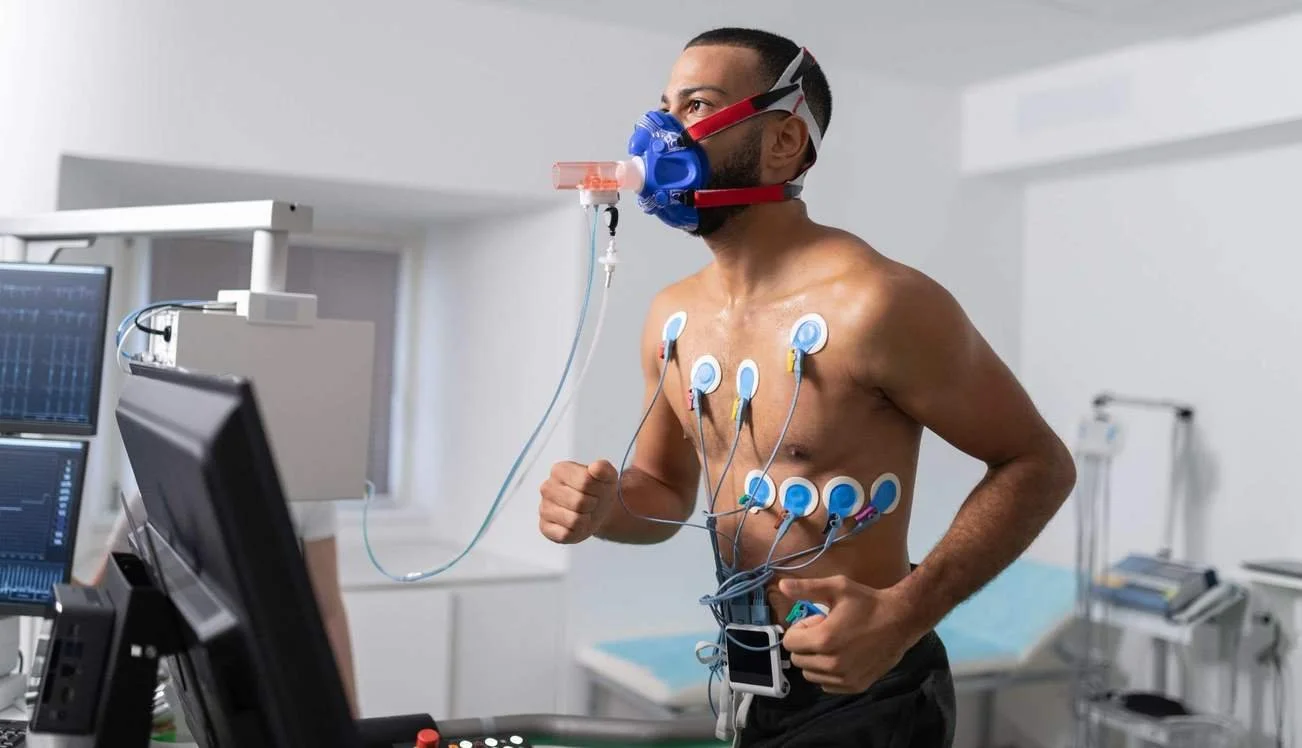
The CPET test will be carried out by both the exercise physiologist and cardiac nurse, onsite at one of the Heartcheck clinics.
The test will be performed using a cycle ergometer (stationary bike) or treadmill (activates more muscle groups, elicits greater oxygen desaturation and produces higher levels of peak oxygen uptake), and the participant will wear a mask (to measure breathing) and Electrocardioram (ECG) stickers attached to a heart monitor, to measure the patient’s heart rate during the test. In addition, the patient will wear a blood pressure cuff so that the nurse can measure the patients blood pressure through the test.
The participant will first get a baseline spiromitory and ECG test, and then- they will proceed to exercise, first at a slow rate, and increasing moderately over a 8-15 minute period, until the participant feels they have full exerted themselves and can no longer continue. The participant will then complete the test by exercising at a slower ‘cool-down’ speed.
-
- The participant is experiencing Chest Pain or tightness (angina)
- The participant is experiencing moderate to severe dizziness
- Cardiovascular changes - A drop in systolic blood pressure of more than 20 mmHg from the highest value, or if blood pressure rises to dangerous levels (systolic >250 mmHg or diastolic >120 mmHg)
- ECG abnormalities are presented – development of arrhythmia’s or significant ST- segment changes (indicating lack of oxygen to the heart)
- Oxygen Saturation - A significant drop in blood oxygen levels (SpO2 < 80%)
- Physical Distress – loss of co-ordination, mental confusion, or extreme leg fatigue
Frequently Asked Questions
-
A CPET appointment at our clinic take approximately 75 minutes, which includes meeting our team, completing our consenting process, obtaining resting medical data, and completion of the physical examination.
-
As this is an exercise test, it’s important that you were exercise clothing and footwear. You should avoid restrictive clothing, including skirts, dresses, open toe shoes and high heels. Women are also advised to wear a sports bra where possible.
-
You are best to eat a light meal or snack a few hours prior to the test, and make sure you are well hydrated. Heavy meals, nicotine, caffeine, and alcohol should all be avoided on the day of the test, as these can affect your heart rate.
-
You should be able to carry on with taking your normal medications, including inhalers, with the exception of beta blockers, which may need to be paused. We recommend calling our team for a discussion of your medications, prior to the test, if you are unsure.
-
You will be encouraged to continue exercising if you feel its possible, however you will be in complete control when you do the test, and can stop it at any time.
-
The mask will be snug and air-tight over your face, and may feel odd at first, however it will in no way restrict your breathing. If you have a fear/phobia of masks or having things on your face, it will be discussed during the consenting process.
-
We will complete our analysis and review report within 2 weeks of your appointment time. This information will be sent to your referring GP/specialist.
-
If you are doing the test for clinical purposes, such as shortness of breath, fatigue, or as a pre-operative assessment, then we will require
However should you like to do this test as a sports performance enhancement tool, then we will accept self-referral.
-
In some circumstances, the test may be covered by your private health insurance provider. This is usually the case when you are completing the test for clinical diagnostic
purposes. Sports performance testing or general health testing is not currently covered by health insurance and you will need to pay for the test yourself, at the time of your appointment.
If you have any further questions, you are best to reach out to our friendly team.
Ambulatory Blood Pressure Monitoring
Offering both a device-and-analysis service, HeartCheck utilises the latest technology available to ensure efficient and time-sensitive results. Our devices are also the quietest on the market, which improves the monitoring experience for the patient.
Our reports include a detailed breakdown of the patient’s measurements over the recording period, graphical depiction of blood pressure trends and a summary report signed off by Cardiologists.
By guaranteeing an efficient turnaround of clinical data from all over the South Island of New Zealand, you can rest assured that results will be delivered promptly and efficiently to you and your team.
Immigration Cardiology Assessment
HeartCheck offers specialised immigration cardiology assessments to support you or your patients with their immigration process.
Get in touch with us to discuss your needs.